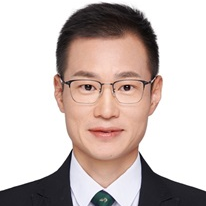
Nanjing University of Posts and Telecommunications, China
Bio: Guan Gui Professor and Doctoral Supervisor at Nanjing University of Posts and Telecommunications, Member of the National Academy of Artificial Intelligence (NAAI), IEEE Fellow, IET Fellow, AAIA Fellow, ACIS Fellow, and Global Guest Professor at Keio University, Japan.
Professor Gui's long‑term research interests cover wireless communications, artificial intelligence and intelligent signal processing. He was selected into the National University Huang Danian‑style Teacher Team (2017) and Jiangsu Provincial“Innovation‑Entrepreneurship Team”(2019). He has received a series of provincial‑level and above talent honors, including Distinguished Professor of Jiangsu Province (2016), High‑level Innovation and Entrepreneurship Talent of Jiangsu Province (2016), Jiangsu“Six Major Talent Peaks”Program (2018), and Jiangsu“333 High‑level Talent Project” (2021). He was twice awarded the Japan Society for the Promotion of Science (JSPS) Postdoctoral Fellowship (2012‑2014, 2018). In addition, he was selected as Nanjing Young and Middle‑aged High‑level Talent (2018), won the Nanjing May Fourth Youth Medal (2018), and was included in Category‑B of Nanjing“Purple Mountain Talent”Program (2024).
His research achievements have won wide recognition from the international academic community. He has received prestigious international honors including the IEEE Communications Society Heinrich Hertz Award (2021), IEEE Vehicular Technology Society Distinguished Lecturer (2022‑2026), and IEEE Communications Society Distinguished Lecturer (2025‑2026). He has been listed as a Clarivate Highly Cited Researcher in the World for five consecutive years (2021‑2025), included in Stanford University's World's Top 2% Scientists list for five consecutive years (2021‑2025), and named an Elsevier Most Cited Chinese Researcher for six consecutive years (2020‑2025). His other major awards include the IEEE Communications Society Member and Global Activities Contributions Award (2018), Best Editorial Board Member Award of IEEE Transactions on Vehicular Technology (2019), Outstanding Service Award of KSII Transactions on Internet and Information Systems (2020), the 9th Outstanding Science and Technology Worker by the Chinese Institute of Electronics (2021), and the First‑class Prize of Technological Invention from Chinese Institute of Command and Control (2023).
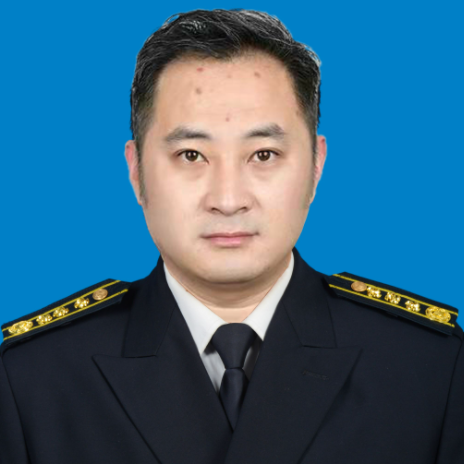
Dalian Maritime University, China
Bio: Ning Wang, Ph.D., is a Professor and Doctoral Supervisor at Dalian Maritime University, and a recipient of the National Young‑Talent Program. He has conducted visiting research at Nanyang Technological University, World Maritime University, and the University of Texas, USA. His research focuses on intelligent marine robots, green‑smart ships, and marine artificial intelligence.
He has been selected for the National High‑Level Talent Special Support Program (Young Top‑Notch Talent), the Leading Talent of Liaoning Revitalization Talents Program, Clarivate Highly Cited Researcher, and Elsevier Chinese Highly Cited Scholar. He is also a Fellow of IMarEST, IET, ISCM and IIAV. As the first completion recipient, he has won multiple provincial‑ministerial‑level awards, including two First‑Class Prizes of China Ocean Engineering Science and Technology Award, First‑Class Prize of China Institute of Navigation Technical Invention Award, and Second‑Class Prize of Liaoning Provincial Natural Science Award. He has published numerous papers in top international journals such as IEEE Transactions on Intelligent Transportation Systems and Ocean Engineering, with many recognized as ESI Highly Cited Papers. He teaches postgraduate and undergraduate courses and devotes himself to talent cultivation and scientific innovation for marine intelligent equipment.
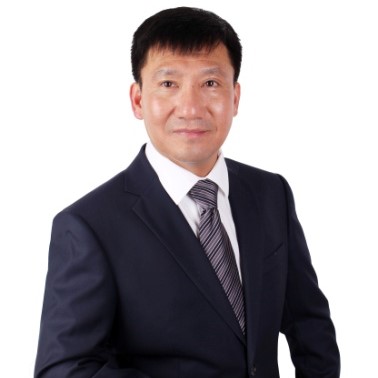
Nanchang University, China
Bio: Professor Weidong Min is a nationally recognized talent and a deputy to the National People's Congress of China. He serves as a Second-Class Professor at the School of Mathematics and Computer Sciences, Nanchang University, where he supervises both doctoral and master's students. Prof. Min is a Standing Council Member of the China Society of Image and Graphics and a Distinguished Member of the China Computer Federation. He formerly served as Dean of the School of Software and currently holds the positions of Dean of the Metaverse Research Institute at Nanchang University, Director of the Key Laboratory of Virtual Reality of Jiangxi Province, and Vice-Chairman and Secretary-General of the Jiangxi Provincial Digital Economy Society. He is recognized as a High-Level Talent of Jiangxi Province, and as both a Leading Talent and the Leader of an Innovation Team under the Jiangsu Province "Double Innovation" Program.
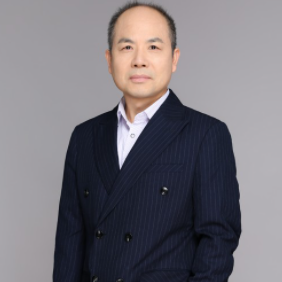
Wuhan University, China
Speech title: Intelligent Multimedia Data Hiding: Techniques and Applications
Speech abstract: Digital music, podcasts, live and recorded webinars, video calls, and streaming video have changed the way in which we communicate, and have become ubiquitous in virtually every organization. We employ these methods to convey ideas, train our employees, engage our customers, and of course entertain. The question is, does digital multimedia pose a threat? Could these channels be used to communicate information covertly, ex-filtrate intellectual property, share insider information, be used to convey command and control information, or provide the needed enabling technology for advanced persistent threats? Additionally, since the size of multimedia files are typically much larger than a single digital photo, does this mean that larger payloads of hidden information could be exchanged or leaked by exploiting weaknesses inherent in multimedia carriers? Or, on the contrary, is the human auditory system sensitive to even small changes in multimedia information such that we could detect anomalies caused by embedding hidden information in such streams? In this talk, we present the intelligent multimedia data hiding techniques and their possible application. We will cover some of the earliest and simplest forms of data hiding in digital multimedia and then move to some of the lasted innovations in order to provide insight into these questions. Some of the research branches, called reversible data hiding, is also depicted.
Bio: Yulin Wang is a full professor in the School of Computer Science, Wuhan University, China. His research interests include image and video processing, digital rights management, information security, intelligent system, e-commerce, IoT, code clone and so on. He got his PhD degree from University of London, UK. He got his master and bachelor degree from Huazhong University of Science and Technology(HUST)and Xi-Dian University respectively, both in China. Before joining the Wuhan University, he has worked in Hi-tech IT industry, including HUAWEI© and national research institute, for more than ten years. He has involved more than 15 national and international research projects. In recently 10 years, Prof. Wang has published 1 book, and 50+ journal and conference papers, including in IEEE TIP. He holds 10 authorized patents.
Prof. Wang served as EiC of 2 international journals and reviewer of top IEEE and ACM journals. He also served as reviewer of Innovative talents projects and national research funds, including National High Technology Research and Development Program of China. Prof. Wang was the external PhD advisor of Dublin City University, Ireland during 2008-2010. In recently 10 years, Prof. Wang served as chairman of more than 10 international conferences, and keynote speakers in more than 20 international conferences. Besides UK, he visited US, France,Italy, Portugal,Croatia, Australia, Germany, korea, Ireland,Singapore, Malaysia, Japan, and Hong Kong. In addition, Prof. Wang has been appointed as the deputy director of Hubei provincial science and technology commission (CAPD) since 2014.
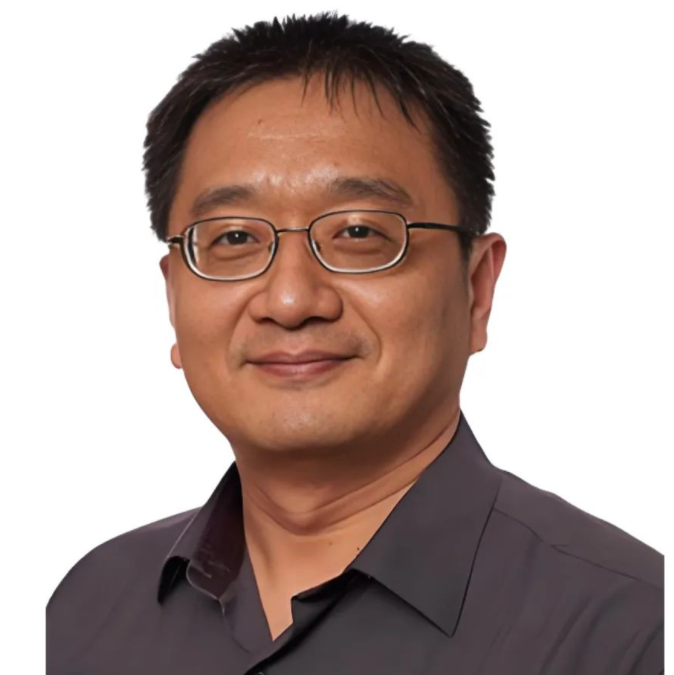
Nanyang Technological University, Singapore
Bio: Yuguang Mu Associate Professor, School of Biological Sciences, Nanyang Technological University, Singapore. He obtained his Ph.D. degree in Physics from Shandong University. Supported by the Alexander von Humboldt Fellowship and Lee Kuan Yew Fellowship, he completed his post‑doctoral research at Goethe‑University Frankfurt in Germany. He joined Nanyang Technological University in 2003 and has been engaged in research and postgraduate supervision ever since.
His research interests cover Artificial Intelligence, Machine Learning, Molecular Dynamics Simulation, Data Analysis, Virtual Screening, and AI‑Driven Drug Discovery. His team focuses on the folding mechanism of biomacromolecules such as proteins and nucleic acids, and develops graph‑neural‑network‑based algorithms for protein‑protein binding‑affinity prediction and drug virtual‑screening workflows. His works have been published in high‑impact journals including Nature Communications, Nature Machine Intelligence and JACS. His Google Scholar citations exceed 9000 with an H‑index of 46, earning him high international visibility in AI‑assisted drug discovery and molecular simulation.
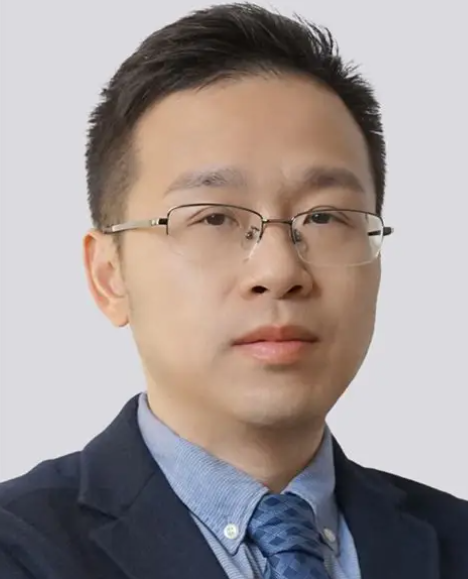
East China University of Science and Technology, China
Bio: Yang Tang, Ph.D., Professor, Doctoral Supervisor. He is an IEEE Fellow and AAIA Fellow. He was selected for the National High‑Level Talent Program (2019), the Young and Middle‑aged Scientific and Technological Innovation Leading Talents Program of the Ministry of Science and Technology (2019), the National High‑Level Young Talent Program (2014), the Shanghai Outstanding Academic Leaders Program (2020), and the Alexander von Humboldt Foundation of Germany.
His main research interests cover intelligent unmanned systems (bionic aerial vehicles, unmanned aerial vehicles, robots), embodied intelligence, machine vision, reinforcement learning, industrial intelligence, biomedicine, etc. In the above‑mentioned fields, he has published more than 200 papers in journals and conferences including Nature sub‑journals, Cell sub‑journals, Physics Reports, CVPR, ICCV, IJCAI, NeurIPS, SIAM journals, Automatica, IEEE Transactions and Physical Review series, among which over 180 papers are published in Automatica, IEEE Transactions and CCF‑A‑ranked venues. He has filed, published or been granted more than 20 patents. He has presided over projects and sub‑projects of the National Key Research and Development Program of the Ministry of Science and Technology, as well as 4 key‑type projects funded by the National Natural Science Foundation of China.
He serves as Senior Area Editor of IEEE Transactions on Circuits and Systems I: Regular Papers, and Associate Editor/Editorial Board Member for multiple international journals, including IEEE Transactions on Neural Networks and Learning Systems, IEEE Transactions on Cybernetics, IEEE Transactions on Industrial Informatics, IEEE/ASME Transactions on Mechatronics, IEEE Transactions on Circuits and Systems I: Regular Papers, IEEE Transactions on Cognitive and Developmental Systems, IEEE Transactions on Emerging Topics in Computational Intelligence, IEEE Systems Journal, Engineering Applications of Artificial Intelligence (IFAC Journal), Science China‑Information Sciences, and Acta Automatica Sinica. He has acted as Guest Editor‑in‑Chief, Guest Editor and Guest Executive Editor for numerous IEEE Transactions and Engineering journals, and has received six IEEE Journal Best/Distinguished Associate Editor Awards. He was awarded the First Prize of Shanghai Natural Science Award in 2019 (First Completion Recipient). He serves as the Vice‑Chairman of the Big Data Technical Committee and the Vice‑Chairman of the Connected Intelligence Technical Committee of the Chinese Association of Automation. Many of his supervised students have been selected for programs such as the Young Talent Support Project of the China Association for Science and Technology, the Excellent Doctoral Dissertation Award of the Chinese Association of Automation, and the National Funded Postdoctoral Program.
 ISDA 2026. ALL RIGHTS RESERVED.